


It is impossible to overstate Australia’s significance to Indonesia. Our bilateral relationship is founded upon a long history of friendship and cooperation, extending across both people-to-people and government-to-government ties.
Language Diplomacy, specifically within the Teaching of Indonesian for Foreign Speakers (Bahasa Indonesia bagi Penutur Asing or BIPA), has become increasingly crucial in the broader context of language and cultural diplomacy. A proper language policy can enhance the effectiveness of BIPA instruction and promote Indonesian language and culture on the international stage. This is aimed at strengthening BIPA teaching, elevating the dignity of the Indonesian language in the international arena, and reinforcing its position as a global language.
Back in the 1990s, BIPA instruction in Australia was the most extensive in any part of the world. Indeed, language education in this particular country was comprehensive, spanning from primary, junior, and senior high school levels ⎯ right up to university as well. Furthermore, some universities even had a dedicated Indonesian Language department, which was truly extraordinary.
By comparison, beyond Australia, language instruction has been rarely offered at the foundational levels; it is typically confined to the university level, where Indonesian studies are often merely a component of a broader Asian Studies curriculum. This situation, unfortunately, has since deteriorated. Nowadays, even BIPA instruction in Australia has been in decline, a trend that we cannot allow to continue unabated, especially as other foreign languages, such as Chinese, show a consistently positive trajectory. This is a situation that we must collectively rectify. While it is primarily the government’s duty, the public can also play an active role in assisting the government to save this highly strategic asset.
The decline in student interest in Australia has become apparent. According to research from Australia’s applied linguistics and language teams since the year 2001, the trend has shown a continuous decline, with many schools and universities closing their Indonesian language classes. On the other hand, we should be grateful that Indonesian is now the 10th official language of UNESCO, a designation made at the 42nd UNESCO General Conference in Paris, France.
Nevertheless, Australia warrants special attention. BIPA instruction in Australia must be preserved. The relationship between our two countries continues to improve, and language serves as a vital bond. The current need is for a renewed strengthening of the Indonesian language and culture, a step that is critically needed amidst the sluggishness of BIPA instruction.
About Gusrizal
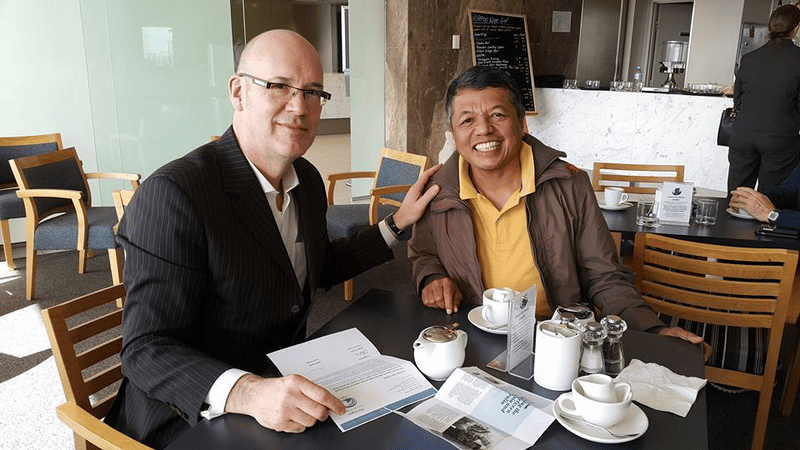
The effort to save the Indonesian language in Australia does not require a formal command; it is our shared concern. As a BIPA instructor and a Foreign Relations specialist at the University of Fort de Kock, Gusrizal feels compelled to act to save the Indonesian language in Australia.
Gusrizal has been helping and supporting teachers and schools in Australia since 2002. He has done so during six visits to various Australian states, all on a self-funded, voluntary basis. Despite receiving no remuneration, this has not dampened his enthusiasm for the work. Gusrizal firmly believes that the process undertaken will be directly proportional to its results, and that is what he has experienced. He will continue his work of over two decades to promote the Indonesian language and culture internationally, especially in Australia. He is grateful that these efforts are now beginning to yield results.
In the year 2007, Gusrizal orchestrated a visit for teachers from West Sumatra to introduce West Sumatran culture to several schools in Western Australia. At that time, no formal cooperation framework had been established. However, as time progressed, he re-engineered a collaboration between Australia and Indonesia (in this case, the West Sumatra Province) with one of the Indonesian Language and Culture Institutes (Balai Bahasa dan Budaya Indonesia) in Victoria and Tasmania.
A Letter of Intent (LoI) for cooperation has since been signed, and Gusrizal was a witness to the signing in Australia back in the year 2023. The Provincial Government is currently preparing the programme details, and God willing, the Cultural Diplomacy initiative for the strengthening of language and culture can be implemented next year.
Previously, back in 2013, Ambassador Greg Moriarty had also expressed his appreciation for what Gusrizal was doing to bridge the relationship between Indonesia and Australia. In addition to the support from the West Sumatra Provincial Government, Gusrizal received support from the Australian government back in 2018 through their Ambassador, Mr. Gary Quinlan. He was recognised for his efforts to enhance the Indonesia-Australia bilateral relationship.
In 2022, as a BIPA instructor, Gusrizal received the Satya Abdi Budaya award. This award is bestowed upon an individual who has faithfully dedicated their life to igniting the passion for Indonesian culture and language. This is the highest and most prestigious award for a BIPA instructor, given by the official language institution APPBIPA (formerly APBIPA).
The author of this article, Donny Syofyan, is a lecturer at the Faculty of Humanities, Universitas Andalas. All images are courtesy of Donny Syofyan. Any opinions expressed in this article are those of the author and do not necessarily reflect the views of Indonesia Expat.