



Indonesia is built on the motto Bhinneka Tunggal Ika — Unity in Diversity — a belief that difference, when held with care, becomes a source of strength.
In the intimate space of intercultural marriage, this ideal becomes a lived practice. As Antoine de Saint-Exupéry wrote, “Love does not consist in gazing at each other, but in looking outward together in the same direction.”
These stories are built in the quiet wisdom of holding on and letting go, with love arriving in the unscripted: a long talk, a game of badminton on a humid evening, or a chance meeting deep in the forests of Borneo.
Finding Each Other
Chandra, from the forests of Canada, met Noviyan, a Chinese-Indonesian “city boy”, in the jungles of Borneo. “It wasn’t an Indiana Jones-style meeting, a friend set us up,” she laughs. They were drawn together by simple joys, such as cooking and trying new foods.
Ivanna’s story began online, via a gaming comic thread. Their first flirtation came after their friendship had formed, when David quoted Byron’s poem “She Walks in Beauty”. “That’s when I knew he was special,” Ivanna remembers. “Everything blended in naturally, our pop culture clicked despite living in different countries.” When they met in Jakarta, they were only friends, but it was during their time studying in the United States that the relationship deepened.
When Worlds Cross
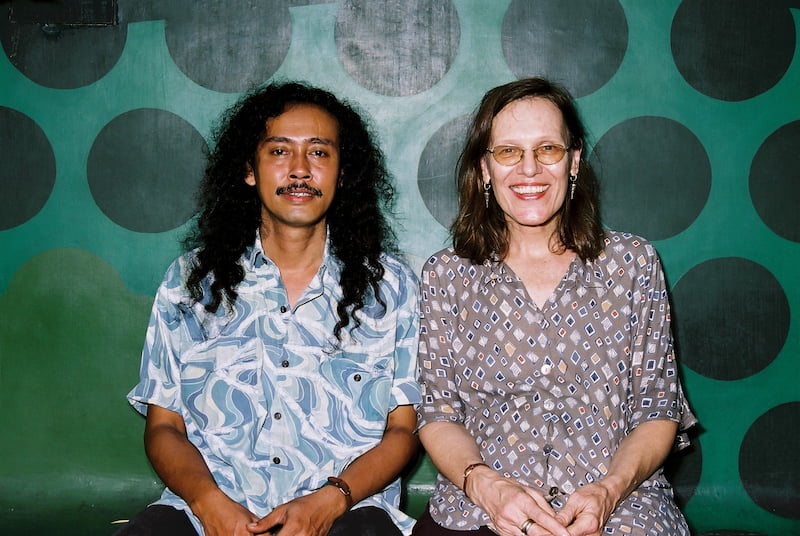
For some couples, the difference is visible from the start. Nia and Ismoyo brought together American and Javanese worlds within Yogyakarta’s art community. “Art was our common ground,” Nia reflects. Yet they had to learn each other’s ways. Nia struggled with indirect expressions of strong emotion, such as anger, while Ismoyo learned to sit with Nia’s directness and her ease in speaking her mind.
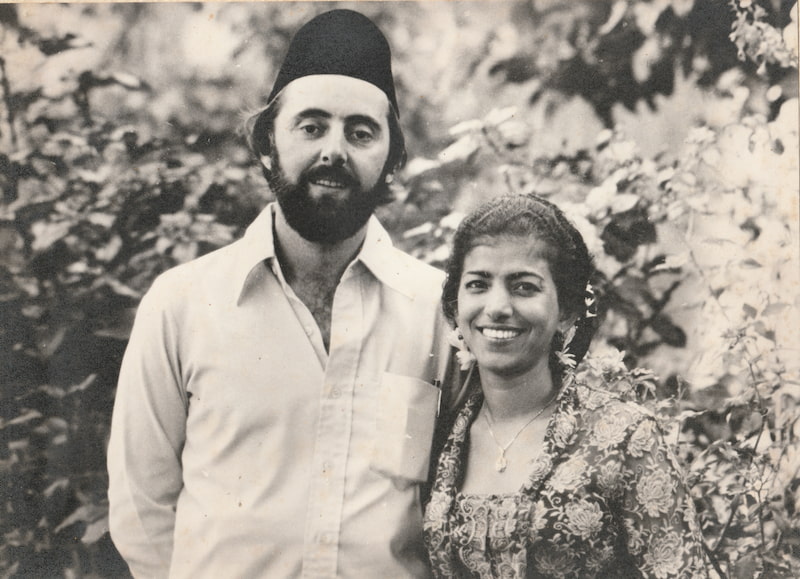
Nick, an Anglo-Saxon Christian Australian, met Fatma, an Indonesian of Arab Yemeni origin, in 1970s Jakarta, turning the difference into a thoughtful discussion. “Fatma’s father thought that he had found a new convert,” Nick recalls. He tried to teach Nick to read the Koran, but Nick preferred to learn about Islam without ritual recitation. Meanwhile, Nick’s family in Australia accepted Fatma without hesitation. “I respect my mother enormously for that,” he says.
Carrying Traditions
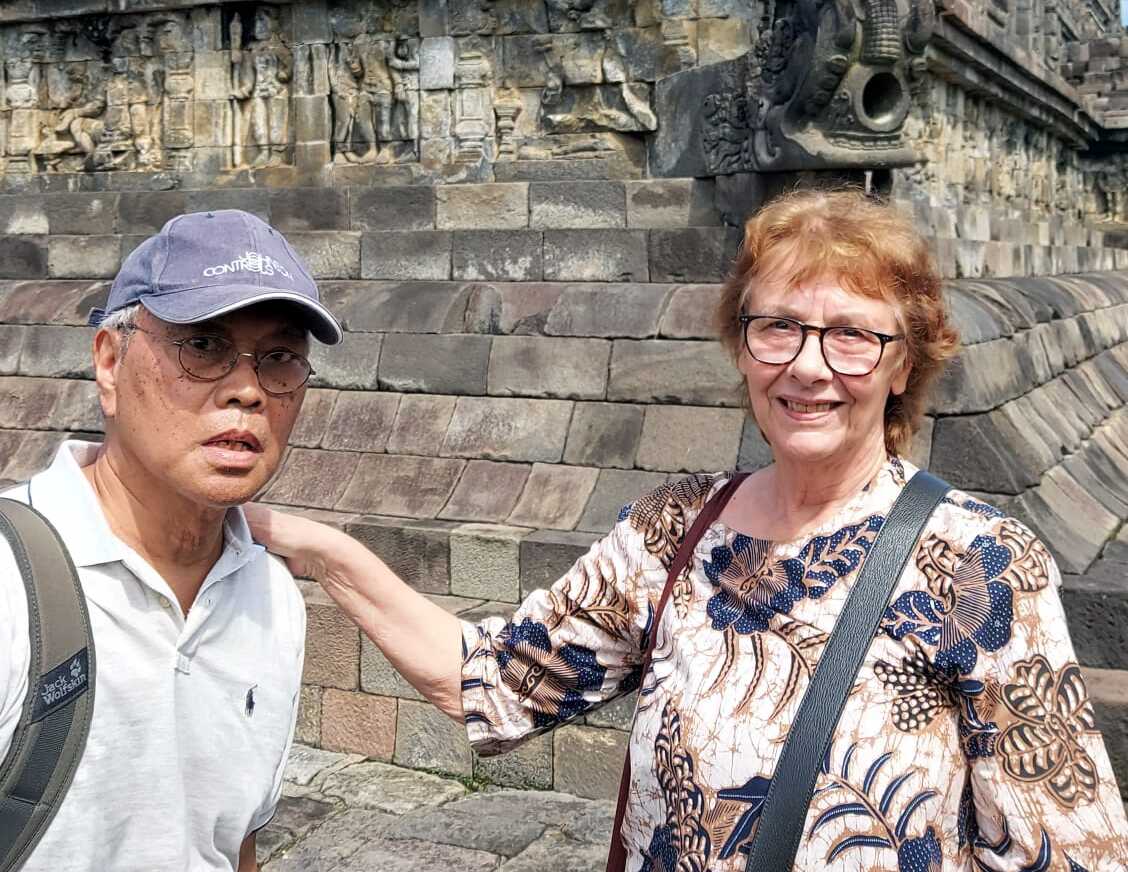
For Claudia, love encountered resistance from the start. She grew up in a German family shaped by the legacy of Hitler’s ideology. When she fell in love with Djoni, her father objected fiercely. “He was mind-branded by it,” she says. Acceptance came with time. “They came to acknowledge that it was my best choice in life,” Claudia reflects.
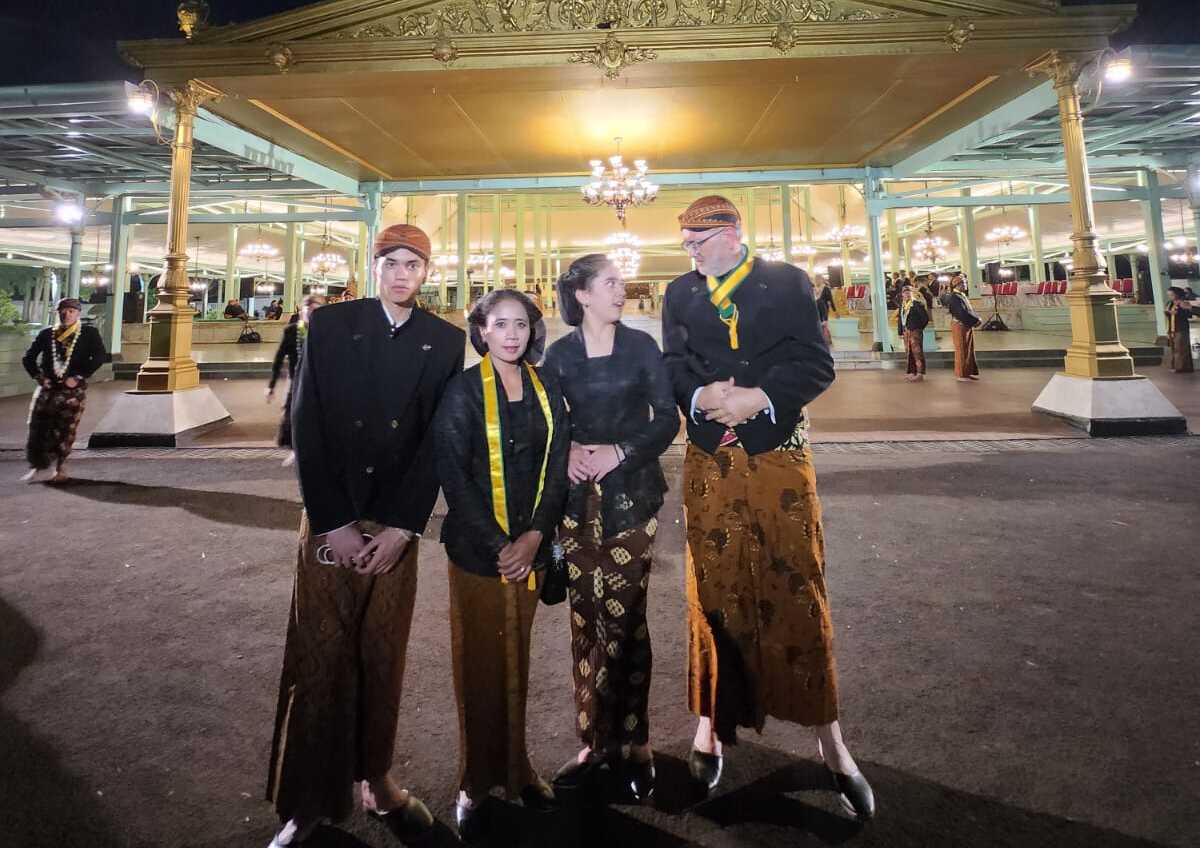
For Yus and her Dutch husband, Koen, rituals became fluid. Life across thirteen countries meant their celebrations were continually reshaped by their surroundings. “Going with the flow is not resignation, but intention,” Yus says. “The essence lies in what I give my children.”
Learning to Belong
Despite sharing a religion, Chandra and Noviyan discovered that belief does not guarantee uniformity. Chandra gradually adapted to his family’s customs. “Chinese New Year is an important family celebration,” she explains. Letting go of familiar childhood traditions, she found guidance in the Bible passage: Love is patient and kind; it does not insist on its own way… Love bears all things, believes all things, hopes all things, endures all things. For Chandra, adaptation is presence. “I show up; I smile,” she says, valuing continuity over insistence.
For Yus, adaptation means learning to release. “By accepting, not making too much of a point of it. Just letting go,” she explains. “He’s trained me to think critically,” she says of Koen, an engineer, while her influence helped him understand the world more deeply. Through her marriage, her faith in Islam deepened. “Now, I feel I am a Muslim not by birth, but by conviction,” she reflects. “We are built from different moulds,” Yus adds. “Reaching the same destination takes time.”
One Table, Many Stories
Food acts as a generous translator in these marriages, where meals are shared long before beliefs are debated. In Claudia and Djoni’s home, cooking follows a rhythm that includes both worlds. “During the weekdays, our helper cooks Indonesian food, and on weekends we cook German dishes,” Claudia explains. Food becomes less about its origin and more about the simple act of sharing time together.
In Ivanna’s home, traditions have blended into something distinctly their own. “David cooks better Chinese food than I do, so he handles the cooking while I decorate.” Small family beliefs shaped daily life — birthdays are celebrated only on the actual day — while French traditions such as Galette des Rois sit easily alongside Lunar New Year. “It just flows,” Ivanna says.
Redefining Home
For Nia, home is built on lineage and responsibility. Her respect for Javanese culture grew over 20 years of learning from Ismoyo’s father. “We all very much love Indonesia,” she says. “Ismoyo’s ancestors were revolutionaries, and he carries that torch in his life and art.” For Nia, home is something rooted, yet growing across generations.
For Nick, home is layered and mobile, shaped by life across borders — from Samoa and India to Italy and Jakarta. “In our house, we still have mementoes from all the places we lived,” he reflects, seeing home as something carried rather than fixed. This exposure gave their daughter what Nick calls “a panel of light switches”: an instinctive ability to move between cultures. Life wasn’t always ‘sunshine and roses’, but learning from one another made the marriage meaningful.
In these marriages, love is more than compromise. It is the process of two people evolving together, one step at a time, until they move forward in the same direction. In a country shaped by difference, respect is learned in the everyday—it is simply how life is lived. Tended with care, these bonds become living stories—imperfect, yet capable of carrying people into a shared future.
Home is not something we simply arrive at; it is something built slowly across the distance of our differences. As E.M. Forster wrote, “Only connect.” In the end, it is simple: when love is given time and patience, it becomes the place where we finally come to rest.