



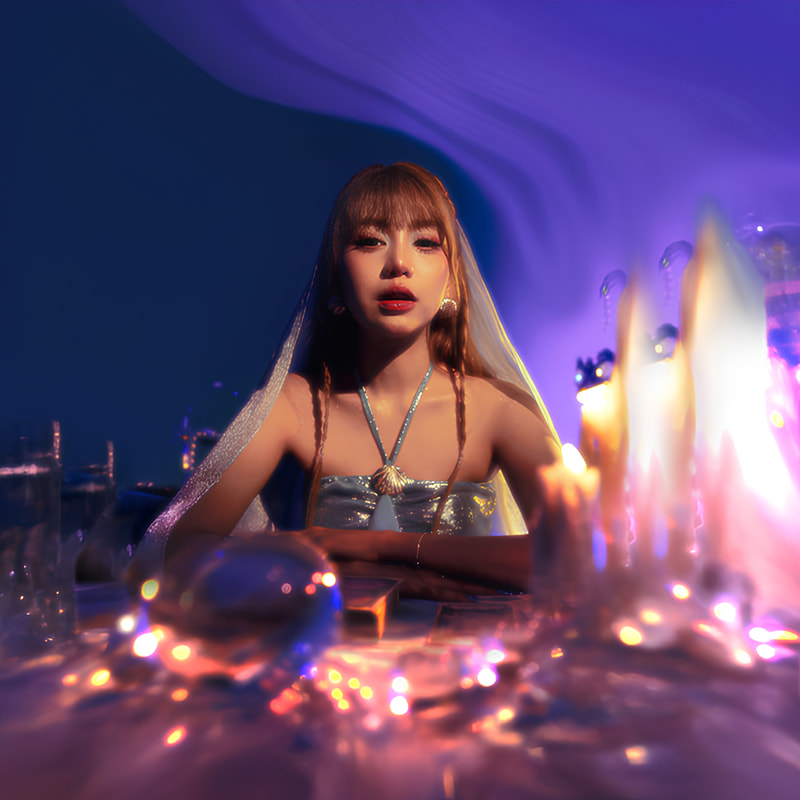
Ghea Indrawari’s second full-length album reaches the highest cosmos among the best albums of 2026 (so far) thanks to her evolved penmanship as well as her ability to balance playfulness with cleverness.
Here’s something confusing, but brutally true: not all artists can make great music, but great music can be made by any artist. This means that no artist should ever be underestimated. A legendary musician could make a mediocre record, whereas the most unexpected singer-songwriter could turn in one of the year’s best. Many might say that the quality of music largely depends on taste, timing, and the uncontrollable elements of the universe — but I wholeheartedly disagree. Our ears are not that naïve. We can tell, as inexplicable as it sounds, when an artist has consciously stepped up their game.
With RASI BINTANG, Ghea Indrawari has stepped up her game. And she has given the Indonesian music audiences one of the best records of 2026.
Let’s take a brief walk down memory lane before taking a deep dive into RASI BINTANG.
Even though Ghea Indrawari’s debut studio album, Berdamai (2024), aptly showcased her then-overlooked skill as a songwriter, what hindered Berdamai from being a spectacular record was its lack of emotional layers and wit. The album’s heartfelt spirit aside, Berdamai nevertheless boasted an old-fashioned pop quality that relied heavily on emotional directness—a characteristic often found in an output delivered by a major pop label. All clarity, no mystery.
But that was then, and this is now.
By going independent, whether she realised this or not, Ghea Indrawari has actually given herself a boundless prospect of freedom that could either make or break her creativity. It was also an opportunity to pluck out bad habits and start growing new, better ones. And, after everything has been said and done, the music must speak for itself. Can she individuate her artistry without a well-oiled engine as her safety blanket?
Fortunately, the quality of RASI BINTANG serves as unshakable evidence that Ghea Indrawari is a lot smarter and tougher than anyone could expect from her.
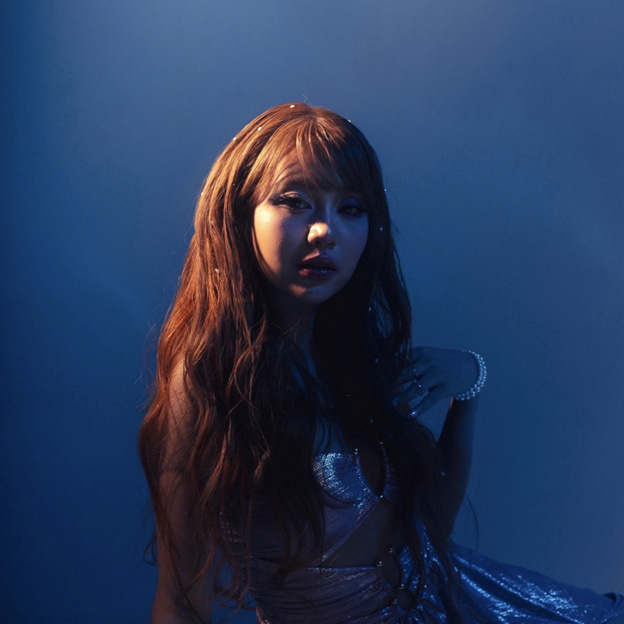
The currently rising “1000X”, placed as the album’s opening track, is merely an inviting talisman, the purpose of which is to charm the unassuming listeners to take a plunge into the marina of songs that make up the entirety of RASI BINTANG. On top of that, it seems as though Ghea Indrawari had finally mastered this unspoken magical spell: to make a great album, the newer and unreleased tracks should be more effervescent than the album’s lead single. The true magic of RASI BINTANG, henceforth, begins once the second track kicks in.
RASI BINTANG unhesitatingly showcases Ghea Indrawari’s cleverness by positioning herself as a different kind of romantic protagonist. Instead of being a typical floral ingénue, she is now a woman who knows exactly her charm and what (or who) she is going after. Just like Circe, a powerful enchantress in Greek mythology, Ghea Indrawari is honest, confident, and believes that she is always one step ahead of fate itself. “PENYIHIR” presents Ghea Indrawari at her most gleeful as well as most commanding, a goddess in the mood for being swooned by a mortal man. In “TWIN FLAMES”, Ghea Indrawari treats distance not so much as tragedy as it is an inspired pursuit. And when she sings “And let’s be honest with ourselves / You and I were a perfect match”, those lines sound less like a humble prayer and more like a factual proclamation. In this case, love is not a losing game for Ghea Indrawari.
The album’s thesis statement, however, busts through the cauldron once RASI BINTANG reaches its middle arc: that even the most astute tarot reader cannot outsmart life, and that the smartest astrologer cannot be immune to the disappointment of being human. “DAUN DAUN” finds the enchantress feeling deeply enchanted instead of the other way around, with Ghea Indrawari’s guileless vocal delivery subtly hinting at the storm ahead. “THE WHITE DRESS” metaphorically illustrates what happens when a heart gets over-confident, only for the romance to burn before it lights up. “UNIVERSE SAY NO” is basically what happens when someone fails to read the stars. The North Star can guide you home, but it cannot steer you away from broken hearts.
Ghea Indrawari’s ability to turn a campy Piscean symbolism into a down-to-earth dissection of human nature is commendable. That being said, it is Ghea Indrawari’s demonstration of linguistic code-switching that serves as the ironclad proof that she has grown a lot as a songwriter since her Berdamai era.
Although three songs in RASI BINTANG are entirely written in English, the transition between each song never feels awkward or jarring. Furthermore, instead of having her English-language lyrics get too caught up with urbanised Anglophile stylisation and pretentious vocabularies, Ghea Indrawari’s linguistic approach focuses humbly on sensible comprehension, which is relatively reminiscent of the songwriting approach within the likes of Ten2Five’s “I Will Fly” and TheOvertunes’ “I Still Love You”. On top of that, the irresistible hooks conveyed by nearly every track in RASI BINTANG solidify Ghea Indrawari as a more-than-qualified melodist.
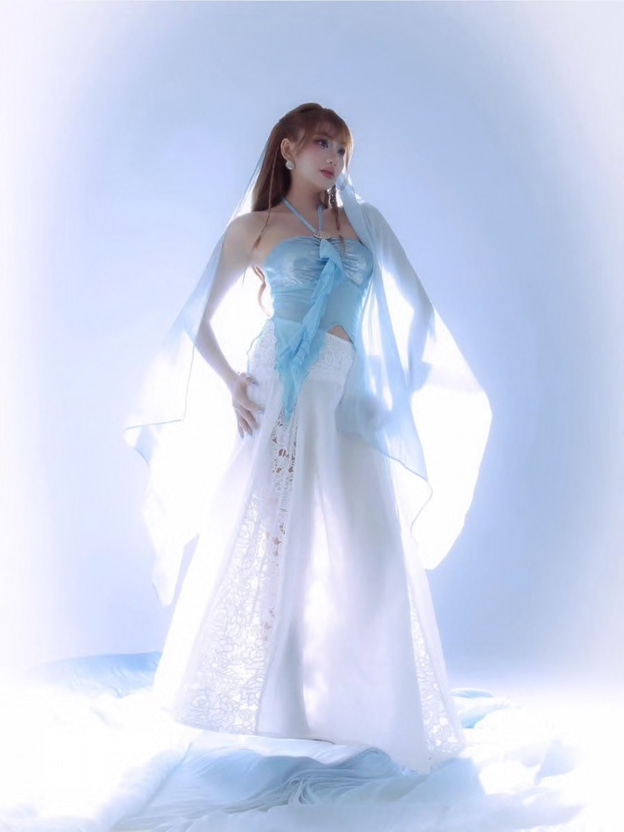
In the hands of other music producers, Ghea Indrawari’s vision for RASI BINTANG would have easily ended up being either laughably kitschy or pompously baroque. Thank goodness she has the right producer for this album, Andrew Joscha, who understands the most palatable sonic flavour for Ghea Indrawari’s penmanship. Departing from the evocative folk-pop sound that put Ghea Indrawari on the map in the first place, Andrew Joscha dished out a sophisticated, radio-ready platter of country pop, dream pop, and twee pop with a teeny tiny touch of pop rock (imagine Lenka meets M2M meets Kacey Musgraves). The final result is a record that maintains a playful and joie de vivre spirit without trying too hard to assert an artistic idealism.
Another accomplishment by Andrew Joscha as the album’s music producer: the sound of each track in RASI BINTANG leaves enough mental space for the listener to absorb, engage, and establish their own personal meaning. No tune in RASI BINTANG is too emotional that it ends up exhausting for the listener’s heart, and no tune is too offbeat that it ends up annoying for the listener’s eardrums. The dreamy, yet dramatic “PAYUNG”, in particular, best showcases Andrew Joscha’s sensitive touch of that elusive, aural balance.
Ghea Indrawari saves the best for last with “LINGKARAN”, easily her best song in her career to date. An ode to not fitting in, Ghea Indrawari has given us a rare kind of empowerment anthem—by articulating the feeling of being an outsider not as a floor for a pity party, but as an opportunity for independence as well as liberation.
Additionally, I couldn’t help but wonder if the lyrics of “LINGKARAN” might also serve as a nod to Ghea Indrawari’s self-awareness, including her current place in the music industry. At least from my point of view as a music journalist, Ghea Indrawari is still the ‘odd woman out’ in our music landscape. Even with a number-one hit under her belt (“Jiwa Yang Bersedih”), Ghea Indrawari is still considered too sweet to earn a golden ticket to join the pop songstress’s club. On the other hand, Ghea Indrawari is still considered too mainstream to earn a golden ticket to join the indie darlings’ club. And ironically, no matter what your profession is, the brighter you get to shine, the more ostracised you usually are from the larger constellation.
But, at the end of the day, who cares? Looking at the exuberant glow radiated by RASI BINTANG, Ghea Indrawari turns out to be the type of artist who works best when underestimated. “LINGKARAN”, in particular, shows that a happy-go-lucky hymn can be more vulnerable and emotionally evocative than a dime-a-dozen power ballad. Also, let’s think about it this way. A star can only shine from afar, in the pitch-dark evening, looking radiant and pretty without giving us any real personality. An artist, on the other hand, is near and warm, occupying an intimate space in our hearts, day and night. Guess which one is cooler.
All images are courtesy of Ghea Indrawari.