



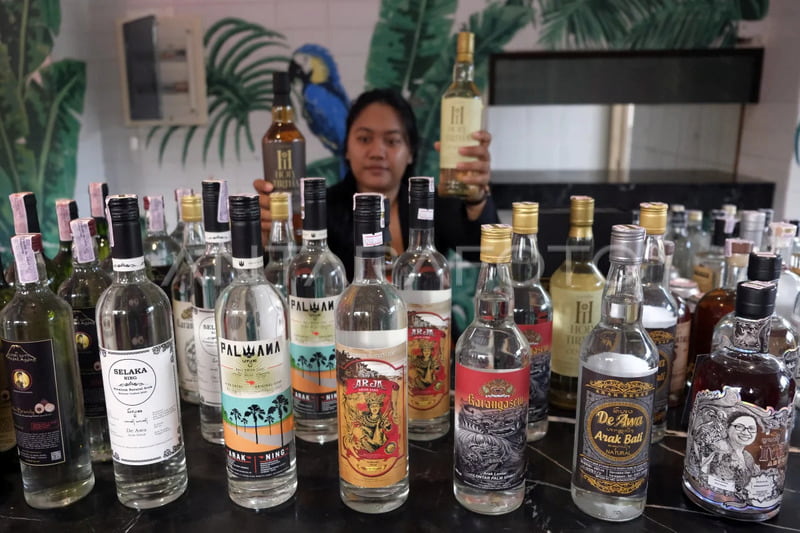
The Governor of Bali Province, Wayan Koster, has requested that local Balinese arak products be increased in outlets at I Gusti Ngurah Rai International Airport.
This request was submitted to the airport management, PT Angkasa Pura I, to provide more space for Balinese MSME products at the entry and exit points for international tourists.
“We’re asking for more space so there’s more than just whiskey, brandy and other products, especially in the duty-free area,” Koster said while inspecting the international terminal of I Gusti Ngurah Rai International Airport, as quoted from the press on Monday, 9th of February.
In the bigger picture, the Governor’s request further emphasises the Bali Provincial Government’s commitment to preserving arak as a cultural heritage, as well as boosting the economy of traditional artisans.
“So, we manage it from upstream to downstream, from the farmer level, through the production process to marketing, which must comply with existing regulations. We want to ensure that the preservation of Balinese arak benefits arak artisans and can boost the local economy,” continued Koster.
Balinese arak products on display must comply with regulations, including the use of Balinese script on the packaging, in accordance with Bali Governor Regulation Number 1 of 2020. This regulation governs the management of Balinese fermented and distilled beverages, such as arak, brem and tuak, as an effort to establish them as a new economic force rooted in local communities and wisdom. The Balinese Arak Trading Association will ensure that 58 official Balinese arak brands are accommodated for trading at the airport.
“We will introduce them to the international community in a single display case, which will be managed by the Balinese arak association. So, it’s not an individual or a company, but an association,” asserted Koster.
Balinese arak is an alcoholic beverage that is an integral part of the culture and traditions of the Island of the Gods. It has long been an icon of Balinese social life and traditional ceremonies. Traditionally, Balinese arak is made from fruit juices, such as coconut sap, palm sap, or grapes. The arak-making process begins with harvesting these ingredients, followed by a fermentation process that converts the natural sugars in the fruit into alcohol. As a result, Balinese arak has gained a reputation for its unique characteristics and taste, making it a popular drink among both locals and tourists.