



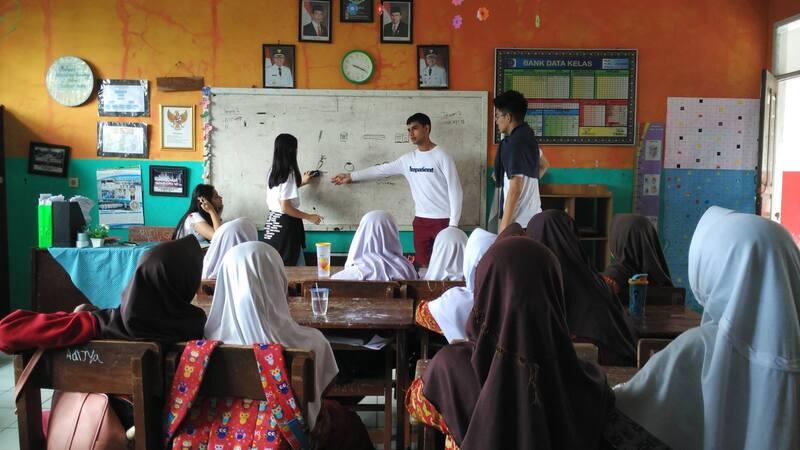
“Education guides children’s natural strengths so that, as individuals and members of society, they may achieve the highest well-being and happiness.”— Ki Hajar Dewantara, the “Father of Indonesian Education”.
Experiential learning may seem modern, yet its roots in Indonesia run deep. In the early 20th century, Dewantara reshaped education by emphasising learning beyond academic achievement. He believed education should guide children through real-life experience, with educators leading by example and allowing students to grow through responsibility. Organisations such as Yayasan Usaha Mulia (YUM) bring this philosophy to life by connecting local communities with students from Indonesia and abroad.
A Holistic Vision from the Beginning
YUM’s story began in the late 1960s, when its founders—Wilbert Verheyen, Sister Rina Ruigrok and Ibrohim Wessels—responded to urgent healthcare needs in Jakarta.
“In the late 1960s, our founders began assisting families in Jakarta through mobile clinics and healthcare services,” explains Vanessa Reksodipoetro, the Executive Director of YUM. Over time, YUM gradually expanded beyond healthcare into education, social assistance and livelihood interventions.
Every initiative begins with listening. “Ideas emerge from issues we observe directly in the community or through feedback from health workers, teachers, parents and community members,” Vanessa explains. “Their insights help us understand not just the problem, but its root causes.”
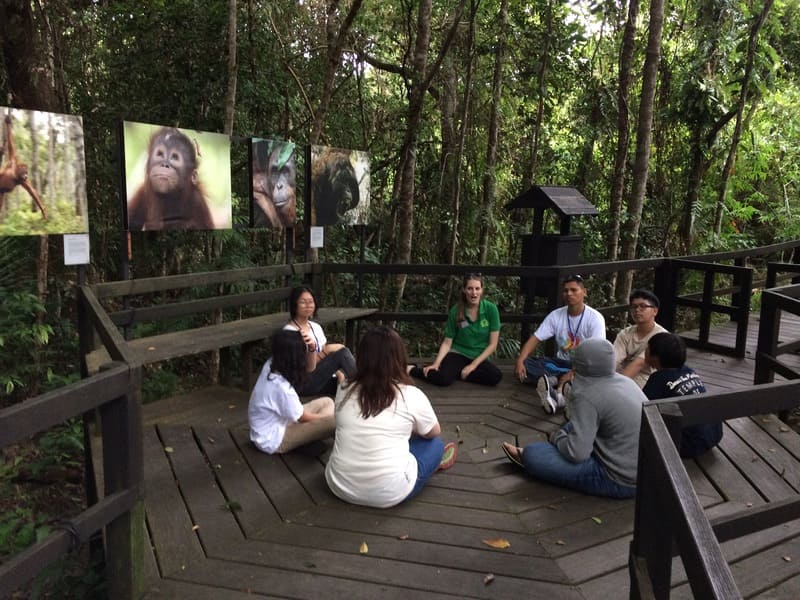
YUM works closely with partner schools to combine volunteering with cultural immersion—such as learning traditional Dayak dances or understanding local livelihoods.
“We hope they leave not just with new knowledge, but with a broader perspective that continues to shape how they see the world,” Vanessa says.
Education Steps Beyond Borders
YUM’s collaboration with schools began organically. “The idea emerged from a Jakarta Intercultural School student who was interning with us,” Vanessa recalls. “She suggested involving students directly in YUM’s projects in Cipanas.”
In 2011, YUM welcomed its first group of students. Today, it regularly hosts school groups across West Java and Central Kalimantan.
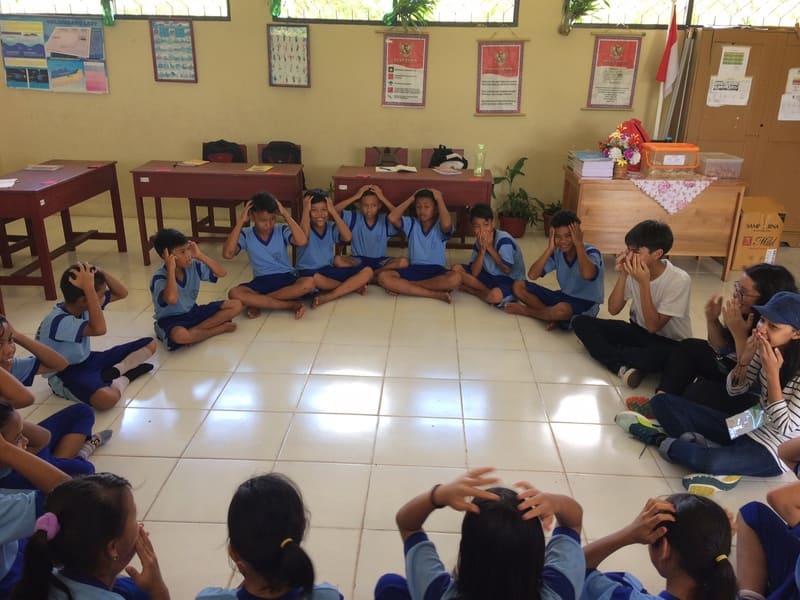
“Our approach is simple and intentional,” Vanessa notes. They support library activities, English lessons, health programmes and sustainable agriculture initiatives.
While YUM works with schools, parents ultimately decide whether their children step into unfamiliar environments. Sending teenagers into rural communities requires trust in the programme and in growth beyond comfort zones. In choosing experience over ease, parents become quiet partners in their children’s growth, recognising that empathy and responsibility are best learned through real-life experience.
“Our goal is to offer a holistic experience—not just exposure to social realities,” Vanessa explains.
Learning through Immersion
For many students growing up in urban environments such as Jakarta, Surabaya or Singapore, rural communities can feel new and unfamiliar. “There is a difference between learning about an issue and experiencing it firsthand,” Vanessa says, noting that living in communities such as Cipanas or Bukit Batu moves students beyond theory.
Immersion offers a deeper experience, developing empathy, adaptability and cultural sensitivity—qualities that are not easily taught yet are essential for responsible leadership today.
Often, what surprises them most is not hardship but joy and resilience.
A student from St Joseph’s Institution International in Singapore reflected: “What impacted me most was working with kids and the elderly. What struck me was how happy they were, even though they led very simple lives. Being around them was invigorating, and it inspired me to be more content and happy, whatever the circumstances.”
A Mutual Exchange
The exchange, however, is not one-sided. “The exchange is mutual—while students gain understanding and empathy, the community gains confidence and connection,” Vanessa says. For the community, these encounters gently widen perspectives.
A local student learning English at YUM’s Vocational Training Centre shared: “It was exciting to meet the students [from overseas]. I learned new words and pronunciation, and the sessions motivate me to be more confident in speaking English.”
Vanessa adds, “We’ve seen a noticeable increase in confidence among community members—especially the children—as they engage with students from diverse backgrounds.”
Learning with Communities
“Our activities are done with the community, not for them,” Vanessa stresses.
Local farmers teach sustainable agriculture. Teachers led literacy sessions. In Central Kalimantan, Dayak elders share stories of heritage and resilience. “In these moments, the community leads the learning,” she explains, as elders share stories that deepen students’ understanding of indigenous identity and change.
For many community members, meeting international students is a meaningful exchange that quietly affirms that their world is larger and that they can step into it with confidence.
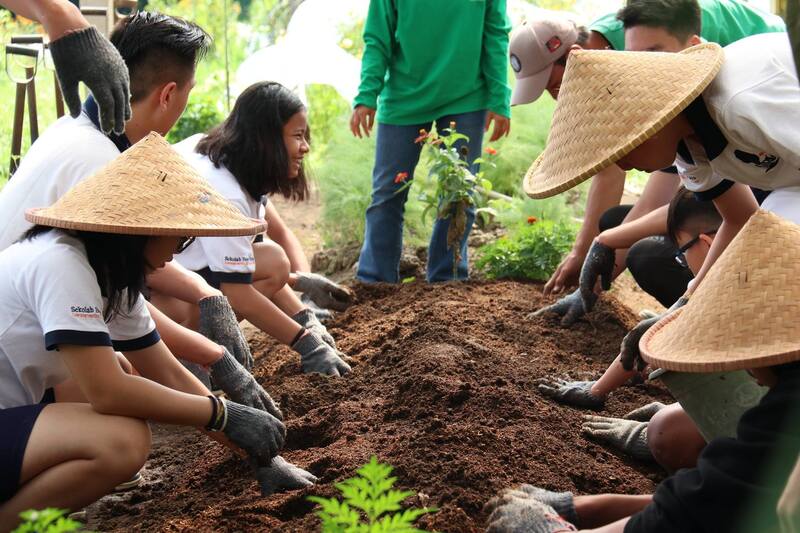
Environmental sustainability is also an important ethos. YUM’s organic farm in Cipanas, West Java, launched in 2009, began by supplying fresh produce to children in its care. As YUM evolved into a community centre focused on strengthening families, the farm became a social enterprise.
“The farm operates as a sustainable enterprise supporting YUM’s mission in health and nutrition,” Vanessa explains.
Today, the farm employs six local farmers and serves as a living classroom, teaching sustainability, ecological farming and the link between agriculture, nutrition and community health.
Rooted in Purpose
“I had known about YUM for a few years and initially joined in 2010, thinking it would be temporary, just to help out,” Vanessa reflects. “But I quickly fell in love with the projects and the people.” Over time, the role became more than she expected—a calling that continues to shape her commitment.
More than a decade on, as interest in experiential learning has grown, so has the programme’s potential. “Today, we see it as helping young people reflect on sustainability, equity and their long-term responsibility as global citizens,” Vanessa says.
At the heart of this vision is a simple conviction.
“I believe it’s our responsibility to help our fellow human beings,” she says. “If you’ve had the privilege of education and decent healthcare, it’s only fair to support those who have not had the same opportunities.”
Meaningful education begins when young people are trusted to step beyond the classroom. Guided by a holistic philosophy, YUM ensures students are not visitors, but active participants in long-standing local efforts. Living alongside families of modest means who remain grateful often reshapes their perspectives. As Vanessa shares, “As one student beautifully wrote, ‘In life, we must be grateful for even the little things that happen, because it’s the little things that matter most.’”