



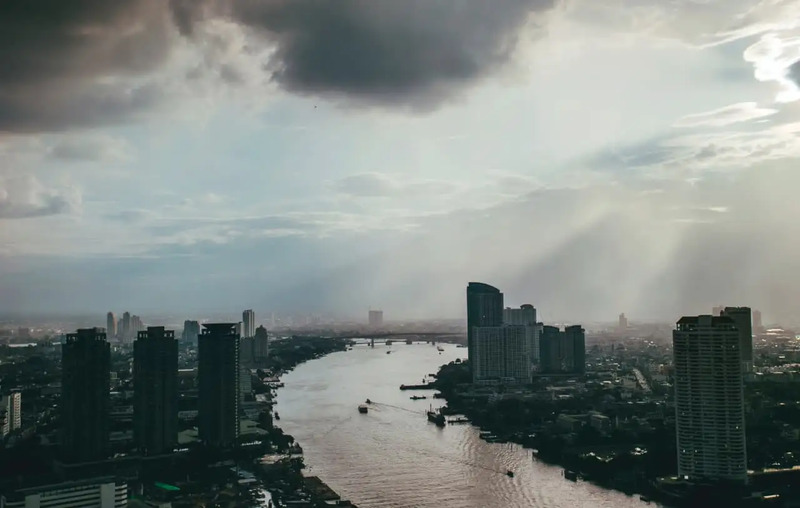
The National Research and Innovation Agency (Badan Riset dan Inovasi Nasional or BRIN) has revealed that rainwater in Jakarta contains dangerous microplastic particles, which originate from human activities in the city.
Research conducted since 2022 has shown the presence of microplastics in every rainwater sample collected in Jakarta, formed from the degradation of plastic waste suspended in the air. This finding serves as a warning that plastic pollution not only contaminates the land and sea but also the atmosphere.
According to BRIN researcher Muhammad Reza Cordova, the microplastics found generally took the form of synthetic fibres and small plastic fragments, particularly polymers such as polyester, nylon, polyethylene, polypropylene, and polybutadiene from vehicle tyres. On average, the research found around 15 microplastic particles per square metre per day in rain samples taken from coastal areas of Jakarta.
“These microplastics come from synthetic fibres from clothing, vehicle and tyre dust, the remains of plastic waste combustion, and plastic degradation in open spaces,” explained Cordova in a written statement quoted on Monday, the 20th of October.
Plastic, meanwhile, contains toxic additives such as phthalates, bisphenol A (BPA), and heavy metals, which can be released into the environment when they decompose into microparticles or nanoparticles. Additionally, in the air, these particles can bind to other pollutants, such as aromatic hydrocarbons from vehicle exhaust.
“It’s not the rainwater itself that’s toxic, but the microplastic particles within it — because they contain chemical additives or absorb other pollutants,” continued Cordova.
Furthermore, Cordova believes that the modern urban lifestyle is one of the major causes of the increase in microplastics in the atmosphere. With a population of over 10 million people, as well as 20 million vehicles, Jakarta consequently produces a large amount of plastic waste every day.
“There is still a lot of single-use plastic waste, and its management is not ideal. Some of it is burned openly or washed into rivers by rainwater,” he added as well.
Following these findings, the Indonesian Minister of Environment, Hanif Faisol Nurofiq, remarked that this phenomenon is inevitable. Ultimately, waste that piles up freely without processing will eventually produce microplastics, especially when exposed to alternating rain and heat.
“Microplastics are micron-sized plastics that can fly. Yes, this is unavoidable,” he observed.