



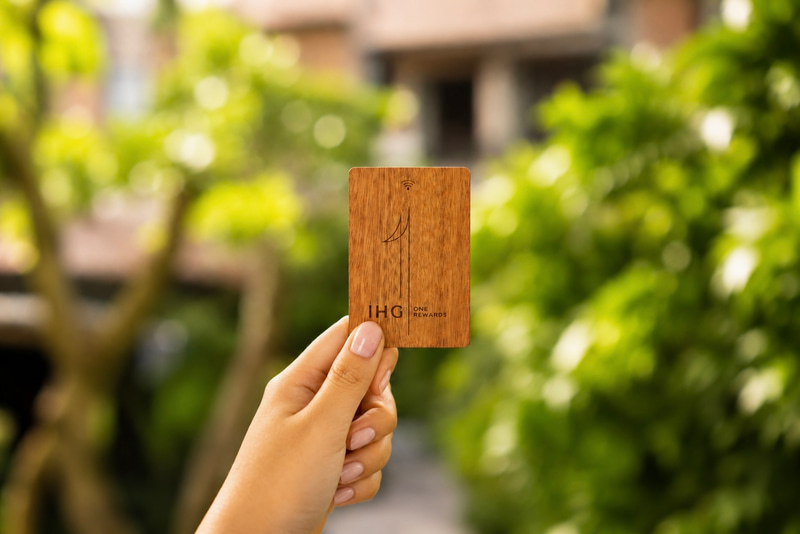
From a wooden key card in a guest’s hand to a quiet cold-storage room behind the kitchen, Holiday Inn Resort Bali Canggu’s sustainability journey is reflected in the care woven into each ordinary moment of a stay.
Holiday Inn Resort Bali Canggu has spent the past year quietly reshaping the way it operates through small, deliberate changes in guest rooms, kitchens, offices, and back-of-house corridors. From wooden room keys to waste sorting and digital front-office processes, these initiatives are practical, visible in daily operations, and designed to reduce waste and resource consumption.
Over the past twelve months, these initiatives have helped the resort reduce single-use plastic by 40% and cut the amount of waste sent to landfill by nearly 30%. The transition to digital front-office systems has also led to a 25% reduction in paper consumption across the property. These tangible results reflect the resort’s ongoing commitment to making sustainability part of the everyday experience for both guests and colleagues.
“Sustainability isn’t something we practise once a year; it’s a principle that guides the way we operate every day,” said Ankit Airon, General Manager of Holiday Inn Resort Bali Canggu. “From the amenities we select for our guest rooms to the way we manage resources behind the scenes, every decision begins with the same question: Is there a more thoughtful, more responsible way to do this? More often than not, we discover a better way.”
This philosophy is reflected in the resort’s day-to-day operations through a series of thoughtful choices, each designed to reduce environmental impact without compromising the guest experience. The room keys are crafted from wood rather than plastic, a small departure from convention that guests often comment on. That same approach extends to in-room amenities, which have been carefully reselected over time to favour reusable, refillable, or non-plastic alternatives wherever the guest experience allows. Across the resort’s dining outlets, the transition continues, with takeaway boxes, cups, straws, and cutlery made from biodegradable materials or wood—a deliberate choice to help keep plastic away from Canggu’s shoreline and the ocean beyond.
Some of the resort’s most meaningful changes are also its least visible. Guest registration and billing at the Front Office are fully digital, reducing paper use without slowing the warm welcome each guest receives. In guest rooms, traditional oshibori have been replaced with eco-friendly wet tissues, a change that, multiplied across thousands of stays, reduces the water, detergent, and energy previously required for laundering.
Behind the scenes, lights are switched off whenever offices are unoccupied, a simple habit repeated every evening that steadily reduces energy consumption and carbon emissions. Organic and residual waste are carefully separated at source, then weighed, recorded, and handed over to appointed vendors through a documented daily process. Recyclable materials are further sorted into paper, metal, plastic, and glass, giving each material the best possible chance of a second life.
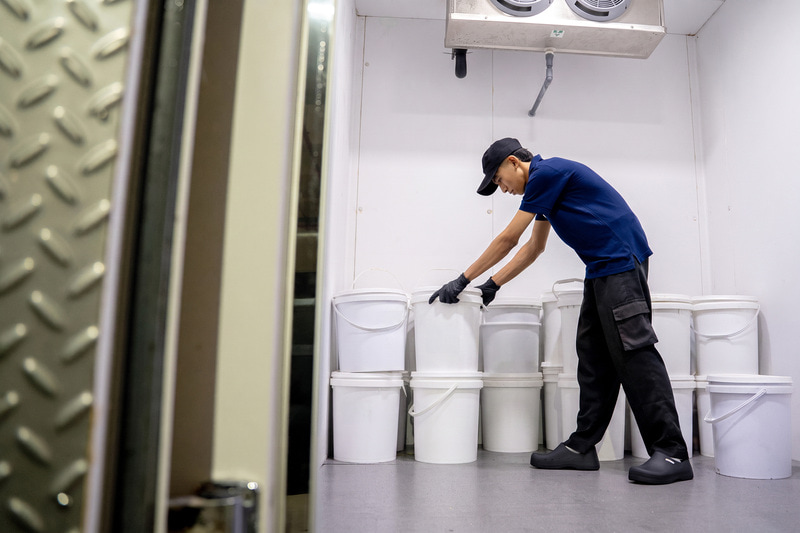
One detail the team is quietly proud of is that, before organic waste ever leaves the property, it is stored in its own dedicated cold-storage room, affectionately nicknamed the “waste refrigerator” by colleagues. It is a simple gesture, but a telling one. Rather than allowing food waste to sit in the tropical heat, the team treats it with the same care as any perishable ingredient, keeping the back-of-house area cool, odour-free, and pest-free until collection day. It is a reminder that sustainability, at its best, is found in small daily habits as much as in grand gestures.

That same resourcefulness extends into the kitchen, where the culinary team embraces nose-to-tail and root-to-stem cooking, finding new purpose for broccoli stems, beet greens, and other ingredients once destined for the bin, while discovering flavours that make their way onto the menu. These dishes are not presented as an afterthought, but as an invitation, sitting comfortably alongside the resort’s signature offerings for guests seeking lower-carbon dining choices without compromising on flavour.
The resort’s sense of responsibility does not end at its boundaries. On weekends, colleagues can often be found along the Canggu coastline, sleeves rolled up, taking part in beach clean-ups alongside the community they call home.
Further inland, another contribution is taking shape. Through a partnership with a third-party organisation, the resort donates its used cooking oil (UCO) to support a waste management education programme for local schools in Bali, transforming a kitchen by-product into a lasting lesson for the next generation in caring for the island they will one day inherit.
These initiatives are woven naturally into everyday life, whether for a colleague finishing a shift or a guest returning from the beach. They may seem like small details, but they reflect the resort’s broader belief: sustainability works best not when it asks people to change who they are, but when it makes the responsible choice the convenient one.
Holiday Inn Resort Bali Canggu will continue to build on these efforts, working alongside its team, its guests, and the local community—not because the work is ever finished, but because it is worth doing well. As these initiatives continue to evolve, the resort remains committed to making sustainability part of how it operates, every single day.