




The Indonesian 2025 war drama film might not have brought home a massive number of trophies and ticket sales, but time has proven that it continues to stand tall as an exploration of how ordinary people carry themselves in pressurised circumstances—and how Indonesian actors should be given more opportunities to portray fractured, nuanced characters.
[Please be mindful of the mild spoilers in this retrospective film review.]
Very few films—especially Indonesian films—stay with me long after the end credits roll. That is one of the reasons why I don’t see myself as an ‘exemplary’ film journalist. Sometimes I’m worried that I simply do not have the heart to be a film journalist or a film critic, as many Indonesian films out there have managed to move and touch so many of their audiences’ hearts—but not mine. Sometimes even I can’t tell what usually moves me and what doesn’t. There are plenty of acclaimed films that made me feel “meh”, whereas the under-the-radar ones gave me some deep thoughts during my train commute home.
Against all odds, however, it is the Indonesian war drama film This City Is a Battlefield (official Indonesian title: Perang Kota) that has persistently stayed with me. I am certain of this because I first watched This City Is a Battlefield when it premiered in Indonesian theatres in April 2025—which means that even more than a year later, this film continues to linger with me and prompt amusing ponderings in my head.
To this day, as I write this retrospective review, I still remember what the air felt like when I was in the theatre, watching This City Is a Battlefield for the first time alongside my fellow journalists and Indonesian cinephiles. Judging from everyone’s body language at the time, even though the theatre was dark, it was clear as day that this film was not what they had originally expected.
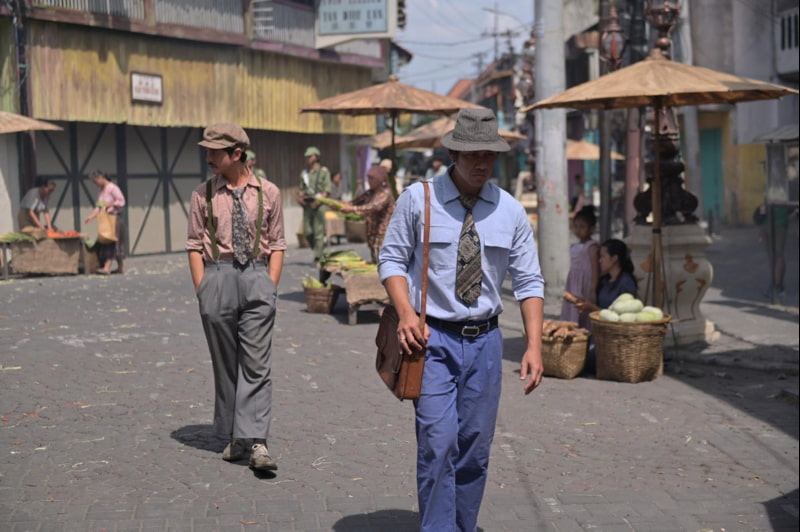
Regardless of what the title of the film had suggested, there were no scenes of intense battle in the vein of Saving Private Ryan (1998). They had already anticipated the sex scenes, but again, judging from my fellow audiences’ body language, they hadn’t anticipated the sex scenes to be depicted so, well, unsexily. I also sensed a whiff of confusion, as well as dissatisfaction, as the film reached the end of its Act III. No one either laughed or cried when the end credits rolled, and in this day and age, that is usually the measuring stick that the Indonesian public uses to define a good film.
In many ways, such unspoken reactions were nothing new to me. My parents, for instance, are big fans of films led by the likes of Charlton Heston and Julie Andrews. That means they prefer films that have splashy scenes, intense drama, a clear and solid moral compass, and, most importantly, an emotionally satisfactory Act III. The heroes must win, and the villains must lose. They wouldn’t like seeing Charlton Heston play a broken and impotent man—and they definitely wouldn’t like seeing Julie Andrews play a morally ambiguous woman. One more thing: I love my parents very much, but they don’t like films that make them learn, think, and wonder. A good film, for them, is the one that is simple and feels good. Full stop.
But here’s the thing: I like This City Is a Battlefield, and I am still surprised by how I *really* like This City Is a Battlefield. I have recently revisited this film, now available to stream on Netflix, and I must insist on my conviction that this film genuinely deserves a much greater appreciation.
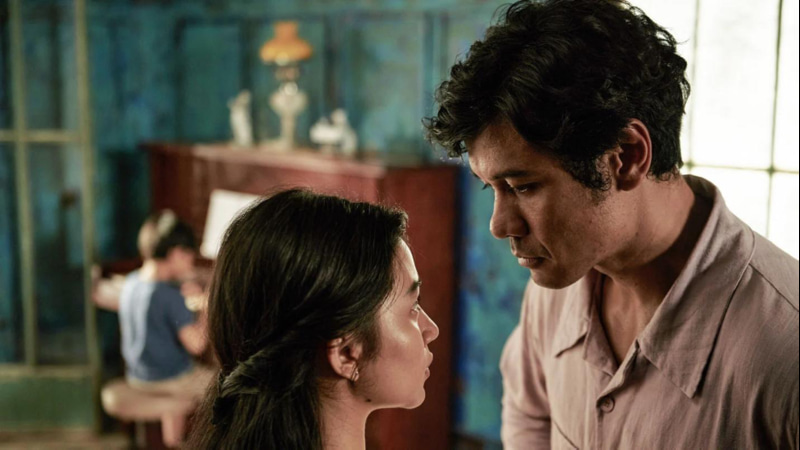
First and foremost, in what films could we ever get to watch the three main leads—Chicco Jerikho, Jerome Kurnia, and Ariel Tatum—playing such fractured, at times unlikable, characters? Here, Chicco Jerikho, usually known as Indonesian cinema’s favourite hero, shows that he has both the talent and the audacity to embody a hollow shell of a man. Instead of translating his character, Guru Isa, as a caricature of depression and despair, Chicco Jerikho uses quiet pathos and a physicality that vibrates with wordless screams to convey this debilitated common man.
As morbid as this might sound, the final minutes of This City Is a Battlefield, from when Chicco Jerikho’s Guru Isa is captured to when he meets his fate, still leave a wide smile on my face. It is because of what Chicco Jerikho delivers with his eyes, as well as the nuanced movements of his haggard physique: dignity, acceptance, and even forgiveness. Although it is not a happy ending for the viewers, it is a happy finish for his character.
Jerome Kurnia’s character, Hazil, doesn’t make me wonder. Hazil, in his essence, is a naive man who has yet to fully register the convoluted air that he is breathing in, and Jerome Kurnia translated this frustrating youth without hesitation. Hazil doesn’t meet a splashy end, and looking back, it is very much understandable. This has never been Hazil’s story to begin with, and it is as though Hazil were the last person to understand that. Jerome Kurnia’s refined performance, however, helped me understand that.

But when all has been said and done, Ariel Tatum was the crown jewel of This City Is a Battlefield for fine-tuning her character, Fatimah, into one of the most mysterious and delightfully puzzling women that I have ever seen on the Indonesian silver screen. Ariel Tatum’s acting choices still deserve closer attention to this day, as she furnishes layers on top of more layers on top of more layers on Fatimah that, unfortunately, remains overlooked by the critics, media, and film audiences.
Case in point, Ariel Tatum’s Fatimah only seems at her most emotionally genuine when she plays the piano. She grieves over her husband, Guru Isa, in a manner that curiously comes across as ambivalent and almost dishonest. And when she praises her husband, the sweetness comes with a note of sourness. (“My husband is one of a kind. If this building exploded, he would be the only one to survive,” she says gently, before Ariel Tatum slightly clips her tone and adds, “He doesn’t need my prayers.” Her delivery is understated, but still gives me chills.)
Call me strange, but what I find the most memorable scene in This City Is a Battlefield is the one in which Ariel Tatum’s Fatimah, after wiping her tears and giving a kiss to her husband’s final letter, only gives the audience her back before walking through what appears to be a very eerie bamboo forest with such graceful footsteps. Too composed, in my eyes at least, for a woman who has just become a widow. Can grief exist alongside relief? Has Guru Isa always been a husband to her or a burden? To this day, I still don’t know what she’s thinking—and I love it. After all, both in This City Is a Battlefield and in real life, it is always the people closest to you whose thoughts can be so unreadable.
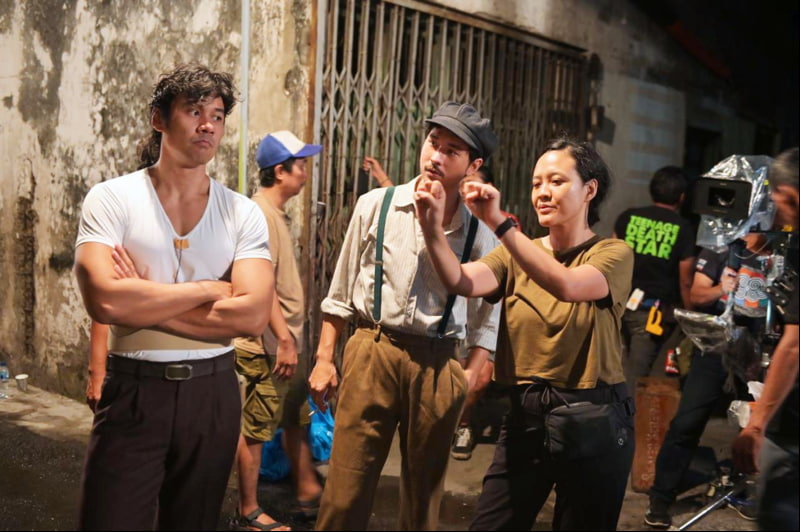
As the director and writer of This City Is a Battlefield, Mouly Surya’s exquisite direction is not deliberately illustrated by how intense the pistol-shooting scenes are, but by the irony conveyed in This City Is a Battlefield that is both nerve-wracking and darkly humorous. Mouly Surya’s framing delicately paints the feeling of being insecure, physically as well as emotionally. Guru Isa’s farewell with Fatimah, in particular, was beautifully orchestrated, as Mouly Surya hints that what is spoken between them might harbour less significance than what is unspoken. It is very much understandable why many people herald Marlina the Murderer in Four Acts (2017) as Mouly Surya’s opus. That being said, This City Is a Battlefield showcases quite a refreshing take on a love story that is messy but remains grounded in maturity.
I understand why the Indonesian public, just like my parents, generally prefers familiar stories featuring likeable actors playing uncomplicated characters. But please forgive me for writing the following: familiar stories featuring likeable actors playing uncomplicated characters do not inform us much about life. This City Is a Battlefield is wonderfully weird because it doesn’t conform to expectations but stands for the truth. What is the truth, you might ask? That an actor’s talent should be met by a complex and creatively rewarding character. That beautiful cinematic moments can be manifested without hyperbolism. That pressure doesn’t necessarily turn humans into diamonds. That marriage is indeed complicated. That death does not necessarily mean defeat. That tragedy is, ultimately, a matter of perspective.
I think that’s, above all, why This City Is a Battlefield still stays with me: as it turns out, there is more to this life and the fellow humankind that I have yet to discover and understand. A good film, however, can help you discover that—and I’ll take the uncompromising truth over forgettable feel-good emotions any day of the week.
All images are courtesy of Cinesurya, Starvision, and Kaninga Pictures.